

Mid-February isn’t the best time to be a cyclist in Southern Idaho. Winter has been in full effect for three months, and even the avid fat biker is getting tired of the snow experience. In addition, the daytime temperatures this year (2017) are now getting above freezing which is melting the snow and thawing the frozen earth. Unfortunately that means that the wonderful trails we have at our doorstep here in Boise, Idaho (http://www.ridgetorivers.org/) are basically off limits (except for early in the morning, or at night) due to trail erosion issues and bicycle drivetrain longevity considerations. If you are looking for a place to ride and not interested in the local paved pathways there are few options available. Fortunately, a short drive to the south lies a natural wonderland that is curiously underutilized by local cyclists.

Bruneau Dunes State Park (https://parksandrecreation.idaho.gov/parks/bruneau-dunes) is a 4,800 acre recreational area located just south of the Snake River about 60 miles south of Boise. This Idaho State Park was founded in 1968 and is best known for its huge sand dunes (the tallest rises 470 feet above the surrounding terrain), RV camping, and its observatory. However, there is more to Bruneau than those attractions, it is also home to a trail system that caters to equestrian users and snakes around the park to locations the average park visitor never visits. When last winter’s doldrums hit, John and I took a trip down there to investigate the riding. I had taken my fatbike on camping trips to the park before so I knew the dunes were ridable, but family obligations had limited my explorations to the campgrounds and lower dunes. John and I quickly discovered during last year’s visit that the equestrian trail is not just a tour of the sand dunes, but instead it is meandering trail with steep climbs, sagebrush, interesting geology, and of course sand. This year, we decided to recruit a few friends for the ride, and to do some additional exploration. It turned out to be a great decision.
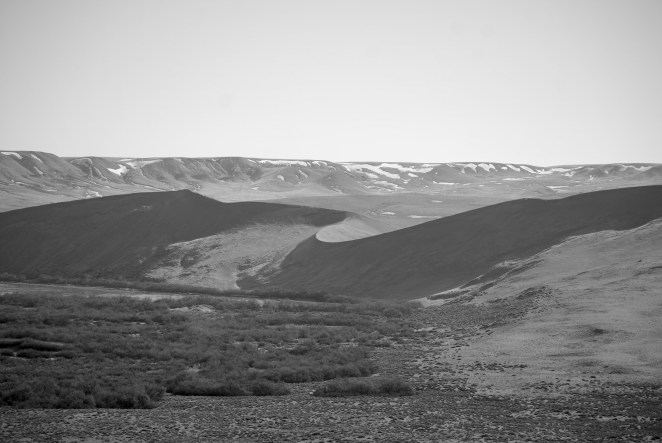
The crew for this Sunday morning ride consisted of four fatbike riders (Ron on a Motebecane, Mike on a Surly Wednesday, John on a Specialized Fatboy, and myself on my Framed Minnesota 2.0) all running tires ranging between 3.8 and 5 inches wide, and a fifth rider (Glenn) on a 27.5 plus bike running 3 inch wide tires (Specialized Fuse). We parked just inside the park gate at the visitor’s center (it was closed, although the restrooms were open), unloaded, checked our tire pressures and headed off to the SW on the pavement to the equestrian camp where the trail begins. The trail heads west out of the camp and quickly turns into a granny gear grind up to the top of the escarpment that borders the dunes. This portion of the trail was a little rough in places from the horse hoof prints (which were still frozen when we rode it), but in general offers excellent traction and it is a nice change from the snow.

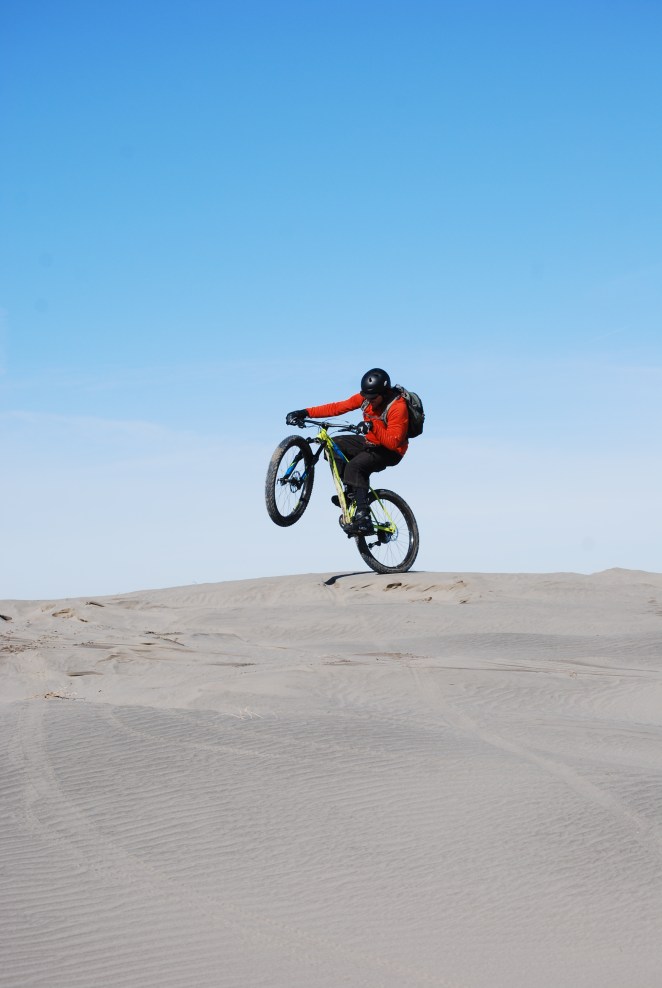
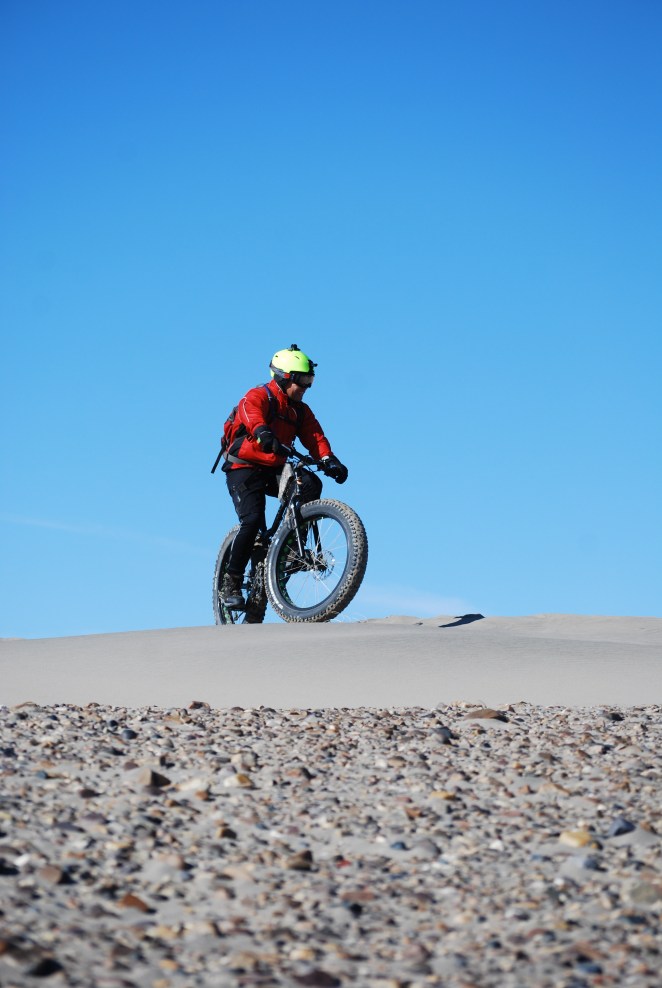
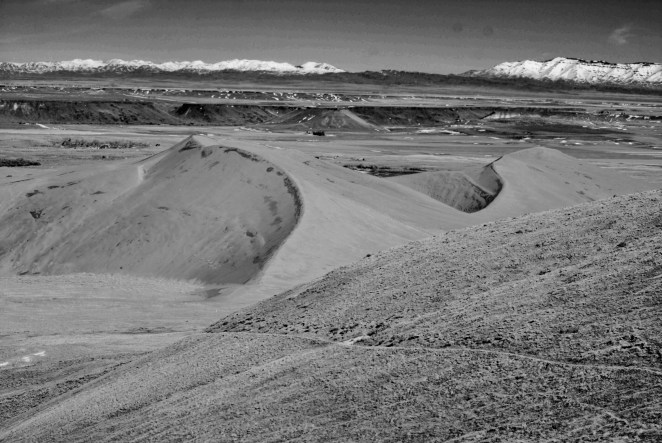
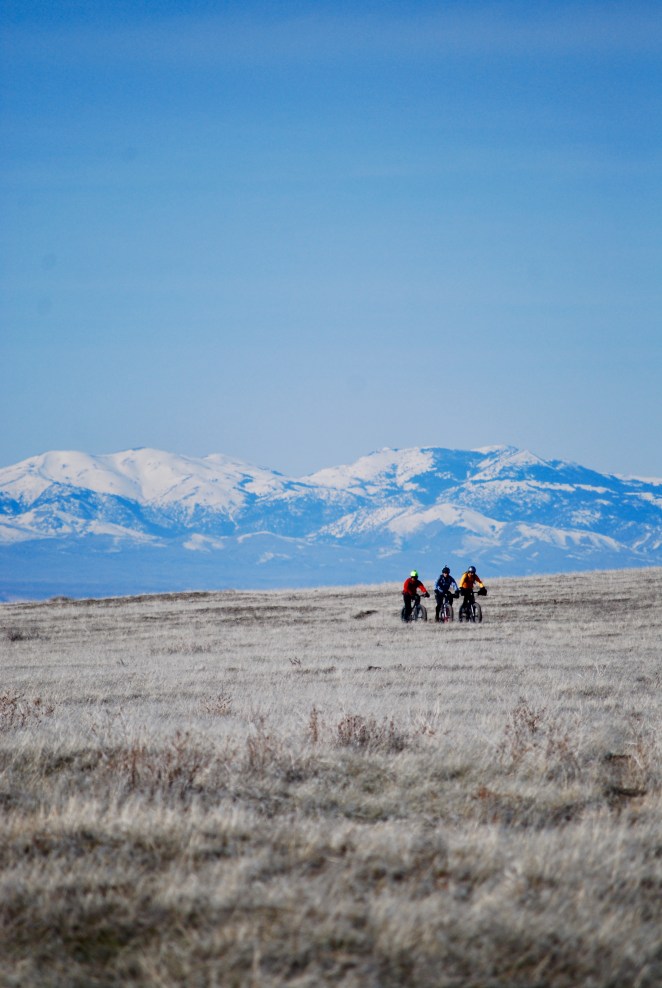
Once on top of the hill, the trail levels out and you start to run into sand. At first they are just little pockets but eventually you encounter full blown dunes. These dunes are beautifully sculpted by the wind and we found it impossible to resist playing around on them. We took turns doing wheelies, dropping off the steep slopes, and generally acting like kids in a sandbox. After getting that foolishness out of our systems (mostly), we continued along the edge of the rim to the south, generally following the trail markers, although at times we were just riding along without any visible trail. This is my favorite part of this whole ride, with uninterrupted views to the east of the huge dunes and to the north of the seemingly endless sagebrush plains. It was while we were in this section that we were occasionally serenaded by an unusual low, ripping sound coming from the north. I recognized this as the sound of A-10 Warthog aircraft strafing targets with their 30 mm rotary cannon on the nearby Saylor Creek Gunnery Range (I had heard this sound when I was performing archaeological survey on the range a while back). The strafing didn’t last long, however, and we were back to the sound of the wind and our own labored breathing.


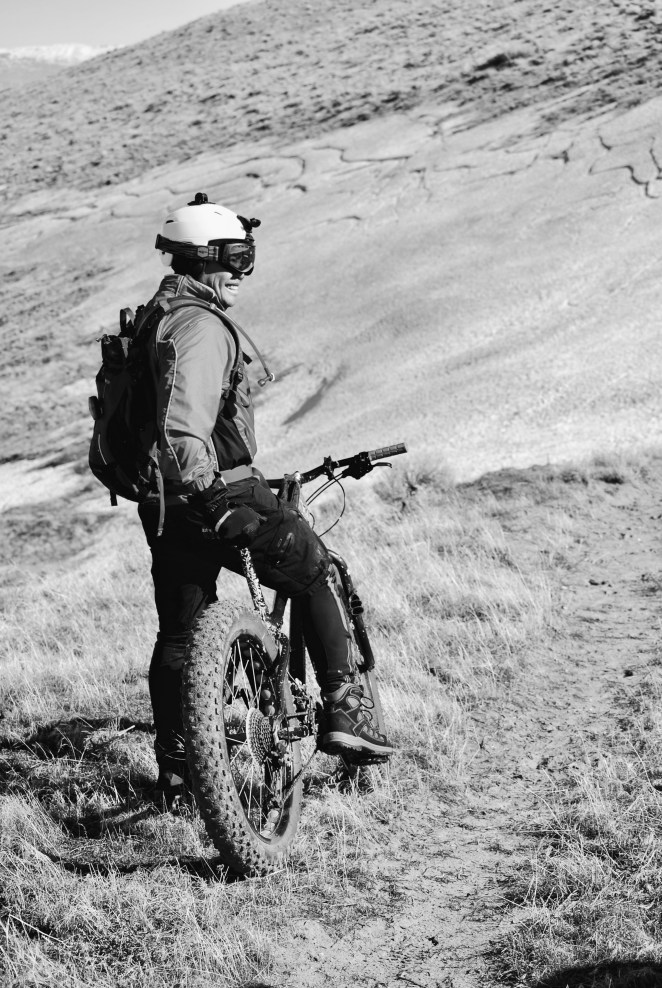
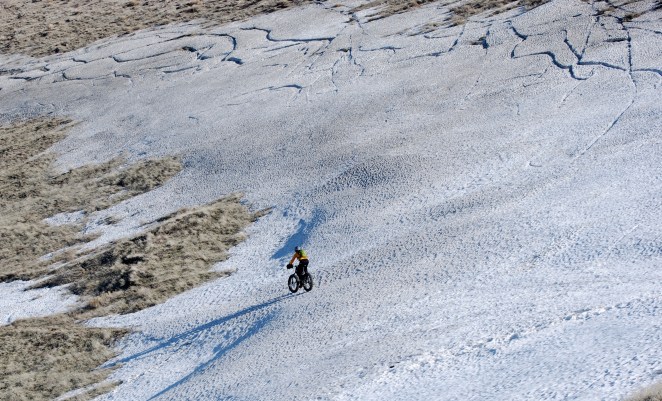
The trail eventually works its way around to the southern edge of the park and there it turns northeast, down a steep grade towards the large dunes in the center of the park. The upper part of this descent was partially obscured by a large snowdrift covering the trail with several feet of snow at a sharp angle. Ron elected to go first and while we watched he effortlessly skimmed over the crusty surface beckoning us to follow him. Indeed, the drift was surprisingly solid and my tires gripped enough that I was bummed when we came to the end of it. From here it was a steep, fairly direct descent to the bottom of the grade on a nice hardpack surface that encouraged us to go as fast as we dared, the speed urge only tempered by the occasional baby head sized rock and a few soft patches.

Upon reaching the bottom of the grade, we once again found ourselves in the sand and some really fun gravity assisted singletrack was the reward for all the climbing we had already done. To our surprise we spied a group of fatbikers working their way towards us from the direction of the really big dunes. It turned out we were on the same trail and when we eventually met up they turned out to be local riders known to most of us. We traded a few notes on the progress of our rides so far and then parted ways so they could continue on their circumnavigation of the big dunes in the center of the park, and we could resume our exploration. At this point we turned to a trail heading north and wound through an area of low dunes and scrub brush for a mile or two before John led us off to the west on a side trip to an interesting area we had explored last year. This area is filled with wind sculpted sandstone and low dunes that presented another opportunity for some playing in the sand. We all took advantage of the opportunity to mess around in the terrain with Glenn demonstrating his skills on a nice little kicker jump.


After some fun we left and regained the trail heading back north towards the equestrian parking area. This part of the trail started out ok but eventually deteriorated as we climbed in elevation and passed from sand to a mixture of silt and sand covered with melting snow that increasingly turned into a fine mud coating everything on the bikes. Within a mile or two though, this was over and we were back at the equestrian campground, where Mike found a working faucet to clean off his tires. The rest of us contented ourselves with deliberately riding though low snow drifts to clean our tires. A mile or so of pavement later we were back at the trucks with smiles all around.
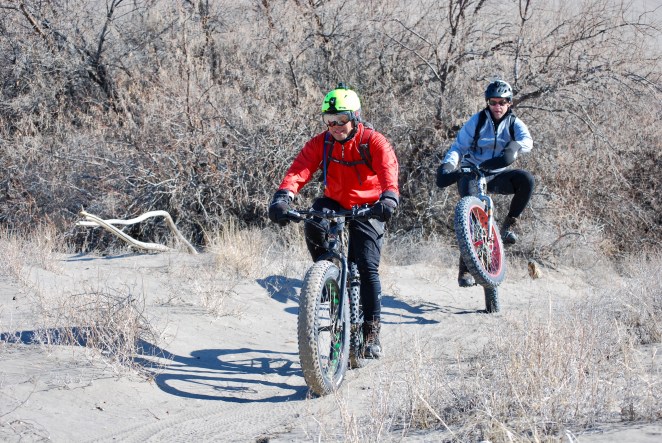
Everyone agreed it was an amazing ride that exceeded our expectations and provided some real challenges, beautiful scenery, varied conditions, and a whole lot of fun. When the word gets out, I suspect this will be a winter riding hotspot.
Notes:
General: Say hi to the Park Employees and be cool to other trail users (especially Horse folks). My interactions with Park employees over the years have been very positive. These folks work there because they love the area and they seem to be interested in biking and want to promote safe, responsible, use of the park. Most of the other trail users out there are going to be friendly and at least curious about fatbikes. Clean up after yourselves, set a good example. Be particularly friendly and courteous to the horseback riders, the trails were set up mostly for them and we don’t need any more trail conflicts. Remember, National Parks are not into fatbikes so let’s keep the State Parks on our side.
Mileage recommendation: Loop mileage varies but be aware that riding in the sand is harder than “normal” riding conditions, so a 9 mile ride feels like a lot more than that. Start with a shorter loop so you have some extra energy to play on the dunes.
Fees: Entry to the park is $5 per vehicle, or you can purchase a Idaho State Parks Passport for a $10 annual fee (https://parksandrecreation.idaho.gov/idaho-state-parks-passport-0). I recommend the passport as you will want to return to Bruneau and there are lots of other amazing parks in the Idaho State Park system including Harriman Park in eastern Idaho (groomed fatbike trails!).
Equipment: A fatbike with 4 inch tires or wider is recommended. Glenn made due with his 3.0 inch (x 27.5”) tires, but he struggled in some places and if the sand was drier, he might have had an issue. John tried to ride this loop in the late spring on a 29er with 2.1 inch tires and had to abandon the ride and hike out. Sand is better when it is wet, but having a big tire is always better. Also, bring a spare tube. I know fatbike tubes are heavy but it’s better than pushing and the low pressures you will want to run in the sand can lead to pinch flats on the occasional rock sections. Also, there are goatheads (a local thorn type that can easily puncture a tire) in and around the campgrounds.
Water: Bring plenty, even in the winter. You need more than you think you do. Also, the park isn’t very big but you can find yourself a long way away from help if you need it, be prepared.
Temperature: It is generally warmer on the dunes than it is in Boise. In fact, it can easily feel 20 degrees warmer on the dunes so winter is the best time for riding out there. On the other hand, it can be windy and cold up on the equestrian trail so it is a good idea to wear layers and be prepared to make some adjustments as the ride progresses.
 just over that hill
Looks interesting! I’ll have to venture out there sometime!
LikeLike
Any gps tracks from your ride?
LikeLike
No GPS tracks, but this is an easy ride to explore without. Before you get to the visitor’s center turn right on the gravel road that heads back to the equestrian area. Once you get to the horse campground you will see a trail marker that notes the start of the loop. Head up to the rim and follow the trail. You will have lots of diverse terrain to enjoy. The fat bike is the only way to negotiate this trail. I know this from trying and failing my first time on a standard 29er. The sections of sand are just to loose and deep up there for anything else. Once you get around the backside of the loop you will have to follow the trail down to the backside of the big dune. Once there you can choose how you want to finish your ride. The short rout takes you back in the direction of the horse camp where you started. The longer loop is going around the big dune headed to the wagon wheel campground then following the paved road back to the park entrance and then down the gravel road to the horse camp again. It pretty intuitive once you get going. Have fun!
LikeLike